
Founder Blindspots - Part 2 of 2:
Customer Success Is Your Biggest Untapped Revenue Engine

" Every founder obsesses over the next customer. The best scaling companies obsess over the customers they've already won.”
Every founder celebrates landing a new customer. The contract is signed, implementation begins, and the sales team moves on to the next opportunity.
That's exactly where one of the biggest founder blindspots begins.
Many early-stage companies view Customer Success as a post-sales support function—responsible for onboarding, answering questions, and ensuring renewals.
I see it very differently.
Customer Success isn't a support function.
It's a revenue function.
The Growth Opportunity Most Founders Miss
I certainly understand that investors want to hear about new logos. Sales teams are measured by new business and Founders naturally spend most of their attention on filling the pipeline.
But while everyone is looking ahead, enormous growth opportunities are often sitting inside existing customer accounts.
Many high-growth SaaS companies generate 20–40% of new Annual Recurring Revenue (ARR) from existing customers through expanded adoption, additional users, cross-sells, and upsells.
Even more compelling...
Selling to an existing customer is dramatically easier than winning a new one.
Existing customers have a 60–70% likelihood of purchasing additional products or services.
New prospects typically convert at only 5–20%.
Top-performing SaaS companies also achieve Net Revenue Retention (NRR) rates above 120%, meaning their existing customer base grows before a single new customer is acquired.
Growth isn't always about finding more customers.
Sometimes it's about serving your current customers so well that they naturally grow with you.

The 1,000 User Problem
Imagine you sell a three-year agreement to a company with 30,000 employees.
The initial implementation covers just one division—1,000 users.
Everyone celebrates.
The contract has an ARR of $100,000.
Implementation begins.
Sales declares victory.
Meanwhile, 97% of the opportunity is still sitting on the table
But what happened to the other 29,000 users?
For many organizations...
Nothing.
The account sits quietly until renewal.
The remaining opportunity—potentially worth thirty times the original contract—is rarely managed with the same discipline that won the initial sale.
That's not a sales problem—It's a Customer Success problem.
What Customer Success Should Really Be Doing
Too often, Customer Success is measured by customer satisfaction scores and renewal rates that may not be realized for years.
High-growth companies measure Customer Success differently.
Their mission is to maximize customer value from the very beginning of the relationship, making renewals the natural outcome—not the primary objective.
That means understanding:
How customers are using your product—and why they aren't using more of it.
Which features create the greatest business impact.
Where adoption is slowing.
What new business challenges are emerging.
Which stakeholders are becoming champions.
When expansion opportunities naturally present themselves.
The best Customer Success Managers become experts in the customer's business—not just your software.
They recognize problems before customers formally identify them.
They understand the customer's ecosystem.
They become trusted advisors.
Your Customer Success Team becomes the voice of the customer inside your organization. They translate customer behavior, challenges, and emerging needs into product decisions that matter.

If You're Not Helping Shape the Next RFP...You're Already Too Late.
A key sales lesson I've learned throughout my career is this: if your company isn't helping shape the next RFP, you've already lost strategic proximity to your customer.
The strongest Customer Success teams don't wait for opportunities to appear.
They help customers define the next opportunity.
That only happens when you've invested enough time understanding their business, building trust across the organization, and consistently delivering value.
At that point, you're no longer viewed as a vendor.
You're viewed as a strategic partner.
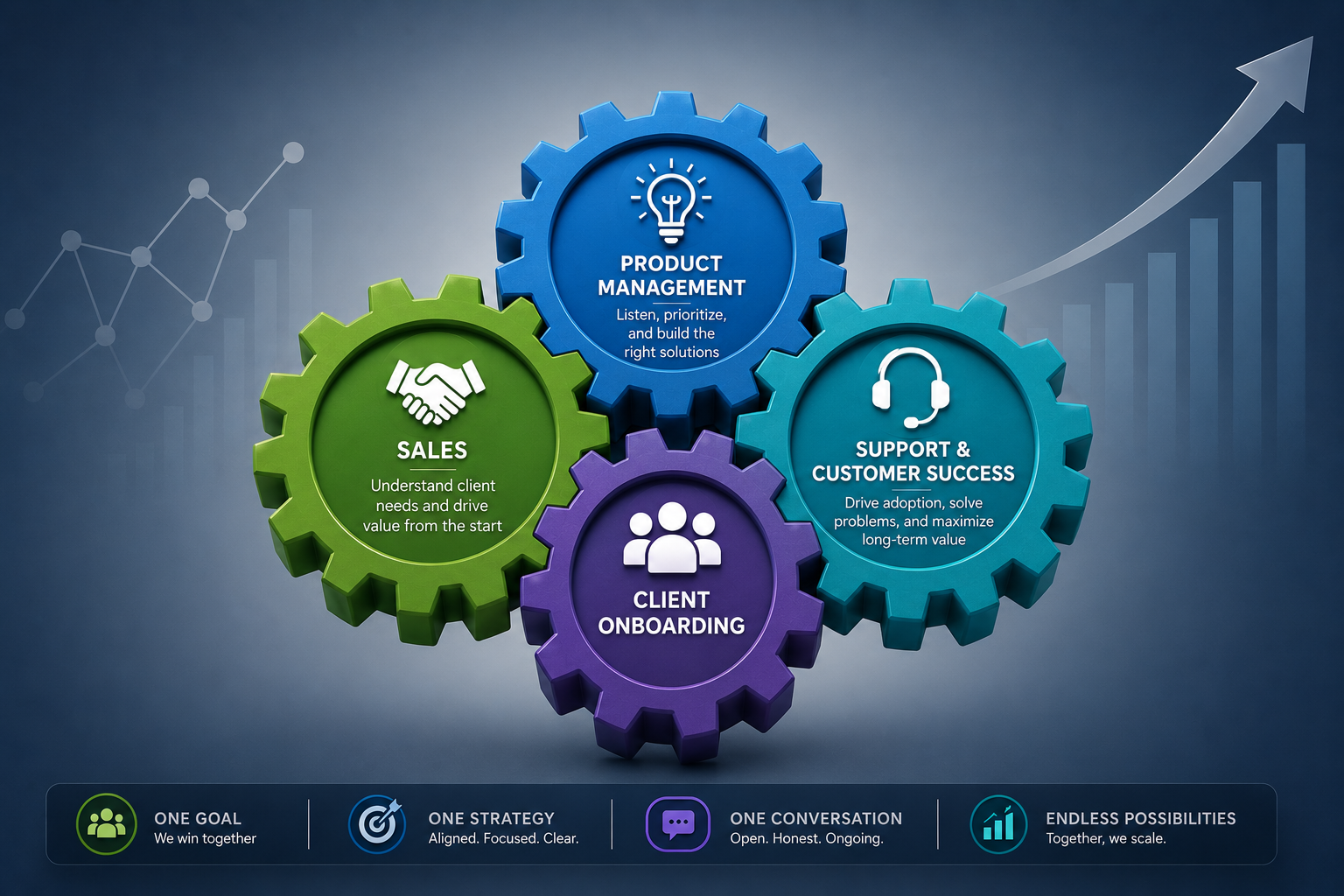
Customer Success Is a Growth Engine
Founders too often see Customer Success as an expense required to retain customers.
The companies that scale successfully see it differently and make the Customer Success team part of the organization’s strategic systems, just like Product, Sales, Client OnBoarding, and Support
Customer Success drives:
Product adoption
Product innovation
Expansion revenue
Customer advocacy
Product insight
Strategic relationships
Renewals
Referrals
Most importantly...
It creates predictable growth.
The Founder Blindspot
Founders often ask:
"How do we acquire more customers?" and “What are the features and products we need to put on our roadmap?”
Founders and their Product teams need to view customer success professionals as the key to understanding the market trends and where there are true sales opportunities with existing clients.
The better question is:
"How much more value can we create for the customers who have already chosen us?"
Because the companies that scale the fastest don't simply acquire customers.
They grow them.
And that's the real role of Customer Success.
Final Thought
Founders often believe growth comes from acquiring more customers.
My experience has taught me something different.
Most founders don’t need more ideas—they need execution capacity that scales with them. That’s where fractional leadership and execution support can bridge the gap between where you are and where you need to be.