Do Right. Be Effective. BLOG
Efficiency without effectiveness is wasted effort — and this series is about changing that mindset. I’ll be publishing a new post every week with real-world examples and lessons to share. Subscribe or check back weekly for the next installment of Do Right. Be Effective.
Welcome to my new blog series: The 5 Basics of Scalable Growth That No One Taught You in Business School
What does strategy have in common with a budget? It can become obsolete the day it is agreed upon.
In this new blog series, we’ll explore why most companies don’t have a communication problem—they have an ecosystem and collaboration drag problem. When Sales, Product Management, Client Onboarding, Support and Customer Success operate as separate functions instead of interconnected parts of the same ecosystem, growth becomes harder to scale.
The goal isn’t more meetings. It’s better connections, shared accountability and an organization designed to execute on the strategy together.
In Blog #1, I explore why Sales needs to be more than a revenue engine. It can be the voice of the market to your Product team—and creating that connection is one of the first steps toward reducing collaboration drag.


Founder Blindspots: Customer Success Is Your Biggest Untapped Revenue Engine (Part 2 of 2)
"Every founder obsesses over the next customer. The best scaling companies obsess over the customers they've already won."
Too many founders view Customer Success as a post-sales support function.
I don't.
Customer Success isn't a support function. It's a revenue function.
Your existing customers are often your greatest opportunity for expansion, advocacy, and product insight—if you have the right strategy.
In Part 1, I argued that your beta customers are your first customers. The next blindspot is just as costly: once founders win those customers, they often stop treating them like their greatest growth opportunity. In Part 2 of my Founder Blindspots series, I explore why Customer Success should be one of the most strategic functions in a growing company.
How does your organization view Customer Success?
Founder Blindspots - Part 1: Your Beta Customers Are Your First Customers

Most founders think a beta program is about testing software.
I don't.
I think it's your first sales program.
Too many startups recruit a handful of beta customers, send them a login, ask for feedback, and hope for the best.
Then they wonder why:
Feedback is inconsistent.
Customers focus on the wrong things.
Nobody converts into a paying client.
Referrals never materialize.
A successful beta isn't measured by the number of bugs you find.
It's measured by the number of customers who want to buy, advocate for your product, and help shape your roadmap.
Your beta customers are your first customers. Treat them accordingly.
In Part 1 of my Founder Blindspots series, I share why I believe beta programs are one of the most overlooked sales opportunities in a startup's journey.
Founder-Led to Scale-Ready Blog 6: Scaling Without Breaking – A Founder's Operating Model
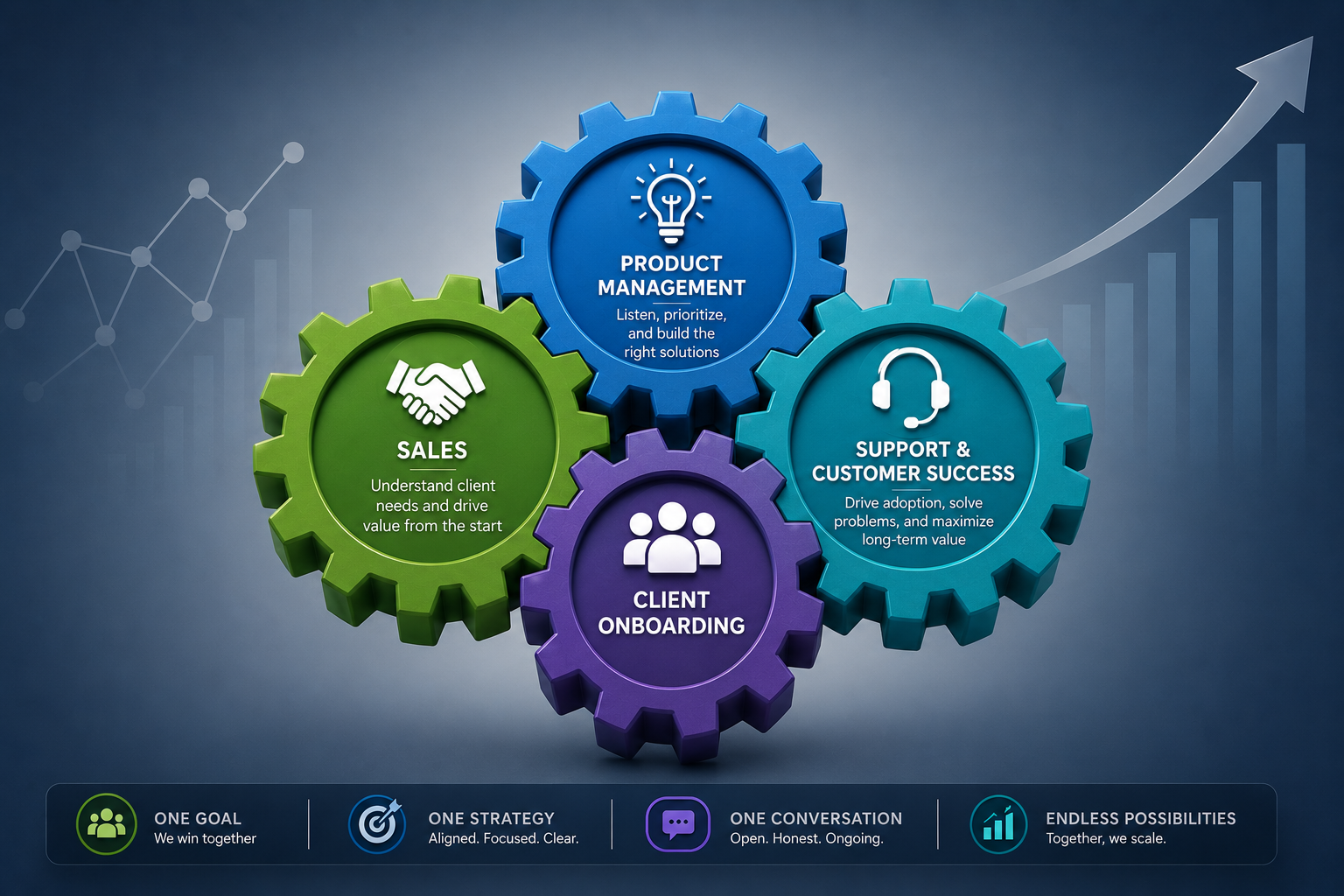
Over the past six articles, I've explored the challenges founders face as they transition from doing everything themselves to building organizations that can scale.
The biggest lesson? Scaling isn't about hiring more people. It's about creating systems where sales, product, delivery, support, customer success, and finance work together to turn customer insights into sustainable growth.
In the final installment of my Founder-Led to Scale-Ready series, I discuss why the founder's role must evolve from being the center of every decision to building the operating model that allows the business to grow without them becoming the bottleneck.
The founder's job is no longer to be the system.
The founder's job is to build the system.
Founder-Led to Scale-Ready Blog 5: Delivery Is the Growth Engine (Not Just Sales)
Most founders focus their growth efforts on acquiring new customers. But as companies begin to scale, the most profitable source of growth is often already sitting inside their existing client base.
In Part 5 of my Founder-Led to Scale-Ready series, I explore why delivery, support, and customer success are far more than operational functions—they are critical drivers of retention, expansion, referrals, and long-term revenue growth. If you're building a company designed to scale, it may be time to rethink where your next dollar of revenue will come from.


From Founder-Led to Scale-Ready BLOG #4 — The Talent Shift – From Cheap Help to Accountable Ownership
Most founders don’t outgrow their vision—they outgrow the team structure that helped them get started. Scaling requires a difficult but necessary shift: moving from loyal support to accountable ownership without losing the culture that made the company successful in the first place.
In Part 4 of my 6-part Founder-Led to Scale-Ready series, I explore why early hires often struggle as organizations grow, the difference between effort and accountability, and how fractional leadership can help founders build scalable execution without overhiring too early.

From Founder-Led to Scale-Ready BLOG #3 — The First Systems You Must Build (or Everything Slows Down)
Most founders think execution slows down because of people—but often, it’s because too much is assumed and not enough is reinforced. The real unlock isn’t more communication—it’s building the right systems so trust can actually scale.
From Founder-Led to Scale-Ready BLOG #2 - What Got You Here Will Break You There
Early-stage growth rewards speed, flexibility, and saying “yes” to opportunity—but those same instincts can start to erode progress as a company scales. In this post, we explore how shifting priorities—often driven by promising new prospects—can quietly derail execution, and why protecting focus becomes one of the most important disciplines a founder must build.


From Founder-Led to Scale-Ready BLOG #1 — The Revenue Bottleneck
Many founders assume revenue growth is just about adding more clients—but what if the real constraint is how revenue is being supported after the sale? If you’re feeling the pull to stay close to every deal and client, it might be worth exploring what that’s telling you about your ability to scale.
New Blog COMING SOON: From Founder-Led to Scale-Ready: Navigating the Transition That Breaks Most Startups
Over the next several weeks, join me in exploring the real questions founders encounter and strategies for scaling during this critical transition.
We’ll discuss the shifts from:
- Founder-managed to scaled organization
- Hero execution to repeatable delivery
- Hustle to structure
- Instinct to intentional systems

Do Right. Be Effective. — Reason #5 Why Startups Fail
The biggest bottleneck in many startups isn’t the market, the product, or the funding. – It’s the founder.
Early on, founders HAVE to do everything—build product, support customers, close deals, solve technical issues—It is necessary.
But as the company grows, the role must evolve from execution to strategy.
When founders stay deeply involved in daily operations:
• Every decision runs through them
• Teams stop taking ownership
• Strategy takes a back seat to firefighting
And the organization becomes reactive instead of intentional.
In the final post of my Do Right. Be Effective. series, I explore the leadership transition every founder must eventually make—and why failing to make that shift can stall growth.

Do Right. Be Effective. — Reason #4 Why Startups Fail
Startups don’t fail financially because they lack capital. They fail because capital isn’t deployed with intention.
Investors want to know that an ROI exists and that money isn’t being wasted.
In this blog we discuss useful advice for keeping progress moving forward while managing the funding provided.
Do Right. Be Effective. – Reason #3 Why Startups Fail
Startups don’t fail because they add systems too early.
They fail because they add the wrong ones—or none at all.
Spreadsheets, Slack threads, and heroics work… until they don’t. What got you from 5 to 15 people won’t carry you to 50—or support larger, higher-risk clients.
Scaling shouldn’t feel chaotic. If it does, systems—not effort—are the problem.

Do Right. Be Effective. - Reason #2 Why Startups Fail
Success requires the founder to focus on growth, not constant execution.
Market fit enables growth — it doesn’t guarantee it. In this next blog in our series, we look at the next common failure point: when growth is limited by the founder’s capacity.


Do Right. Be Effective. - Reason #1 Why Startups Fail
Funding ≠ readiness.
Scaling too early is one of the fastest ways startups burn cash, create chaos, and lose focus.
In Part 1 of my new Do Right. Be Effective. series, I break down how to recognize real market fit — and why pausing before scaling can be the smartest move you make.