Founder-Led to Scale-Ready Blog 6:
Scaling Without Breaking – A Founder's Operating Model
Let's talk about operating models.
Throughout this series, we've explored many of the challenges founders face as they transition from a founder-led organization to a scale-ready company. We've discussed revenue bottlenecks, priorities, communication, trust, talent, accountability, customer success, and delivery. At the center of all of these topics is a simple reality:
Companies don't scale because they hire more people.
Companies scale because they build systems that allow people to work together effectively.
The Product Doesn't Scale Alone
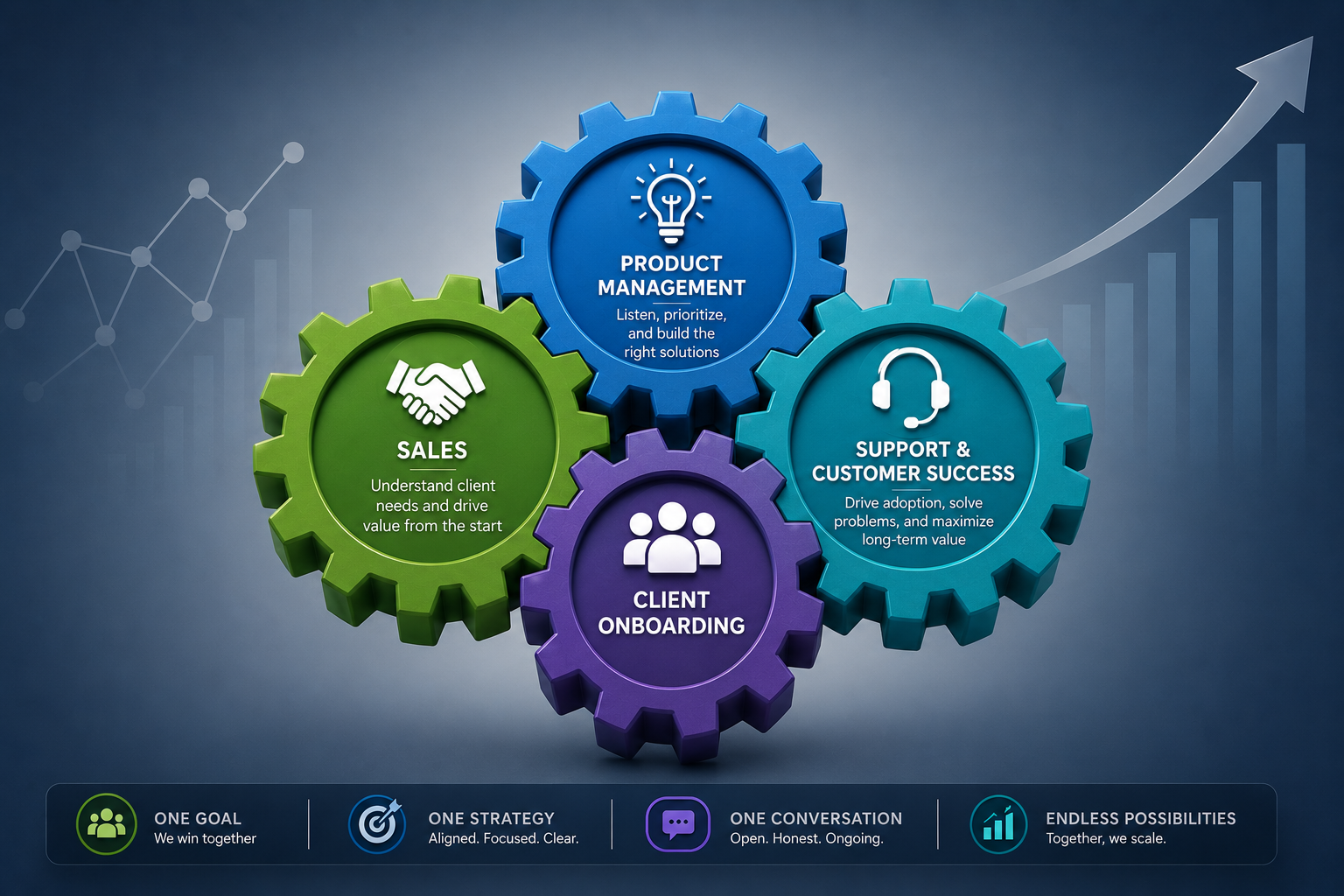
The goal of every product-driven organization is simple: extend the growth and maturity phases of the product lifecycle for as long as possible while continuing to deliver value to customers.
Most founders naturally focus on the product itself, but products don't succeed in isolation. Products succeed because an ecosystem of teams continuously gathers information, creates value, and feeds insights back into the organization.
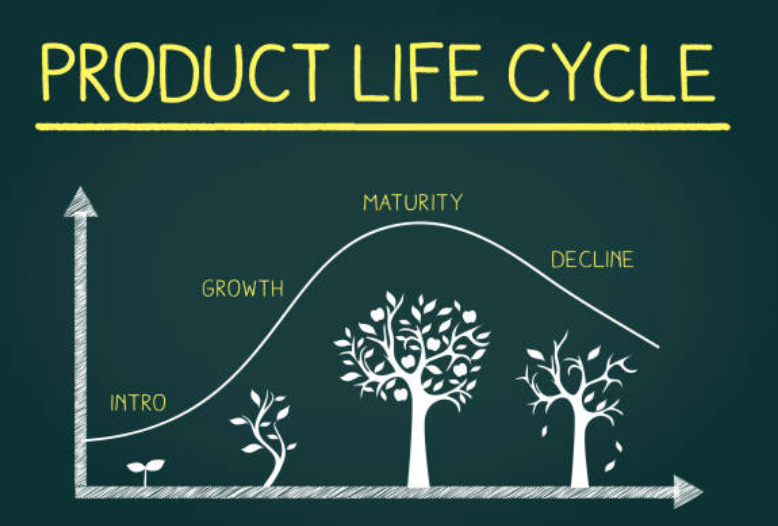
As discussed in my previous blog, some of the most important feedback comes from:
Sales
Why customers buy
Competitive pressures
Market opportunities
Customer Success
What drives adoption
What drives expansion
Why customers stay
Support
Where customers struggle
Recurring pain points
Areas creating friction
Delivery
Whether promises can be fulfilled
How customers experience implementation
What creates measurable outcomes
Product
Converts all of that intelligence into future capabilities
What Happens When Teams Operate Independently
Founders often believe scaling is about adding resources. The reality is that adding resources without improving communication and aligning goals often increases complexity.
When teams operate independently:
Product builds features customers don't need.
Sales sells capabilities that don't exist.
Delivery struggles to meet expectations.
Support repeatedly addresses the same issues.
Customer Success battles preventable churn.
Everyone works harder. Yet growth becomes more difficult.
The organization becomes busy without becoming effective.
When information flows freely between these functions, organizations learn faster.
When information becomes trapped in silos, growth slows.
What Happens When Teams Operate as an Ecosystem
When these same functions operate as a connected system, something different happens.
Product investments become more strategic.
Customer adoption improves.
Client satisfaction increases.
Retention grows.
Expansion opportunities emerge.
Revenue becomes more predictable.
Growth stops being dependent on heroics. Growth becomes repeatable.
And repeatable growth is what attracts investors, increases valuation, and creates long-term sustainability.

Now Let's Talk About Finance
Many founders are surprised when I bring finance into this discussion.
But finance tells us something incredibly important:
What customers and products contribute the most margin.
Organizations often have multiple products, services, initiatives, and growth ideas competing for resources. Not all of them contribute equally to the bottom line.
I've always viewed organizations as portfolios of investments. Every project, initiative, product enhancement, and strategic objective is an investment of finite resources.
The question isn't whether work is getting done.
The question is:
Is the work creating meaningful value for our customers and our business?
This is where the distinction between efficiency and effectiveness becomes critical.
Efficiency is doing things right.
Effectiveness is doing the right things.
Scale-ready organizations understand both.
You can become extremely efficient at:
Fixing bugs
Delivering projects
Writing code
Resolving tickets
Launching new features
But if those activities are not aligned to customer value and organizational goals, you're simply getting better at doing the wrong things.

The Founder's New Role
As organizations grow, the founder's role must evolve.
Early on, founders are often:
The primary salesperson
The product manager
The customer success leader
The escalation point
The project manager
The decision maker
That level of involvement may be necessary in the beginning, however it becomes a constraint later.
The founder's role needs to shift from doing the work to enabling the system.
That means:
Understanding the market and what customers buy
Ensuring products continue to solve meaningful problems
Validating that customers achieve success
Reinforcing the vision repeatedly and consistently
Creating alignment across functions
Eliminating work that doesn't move the organization forward
Building accountability through people and systems
Most importantly, it means creating an environment where information flows freely across the organization, because information drives decisions and decisions drive growth.
Where Fractional Leadership Fits
This transition is often where founders feel the greatest pressure. They know they need additional leadership. They recognize the need for better communication, stronger execution, and greater accountability, but they may not yet be ready to hire a full executive team.
This is where fractional leadership can provide significant leverage.
At Core Performance Concepts, we help founders build the operating rhythms, communication structures, and execution frameworks that allow organizations to scale without breaking.
That means:
Aligning sales, product, delivery, support, and customer success
Establishing meaningful feedback loops
Creating accountability systems
Improving cross-functional communication
Helping founders transition from operator to leader
Scaling isn't about adding more activity.
It's about creating a system that consistently produces results.
Final Thought
The companies that successfully scale aren't the ones with the most people.
They aren't even necessarily the ones with the best products.
They're the ones that learn faster than their competitors.
And that only happens when sales, product, delivery, support, customer success, and finance work together as a connected ecosystem.
The founder's job is no longer to be the system.
The founder's job is to build the system.
Most founders don’t need more ideas—they need execution capacity that scales with them. That’s where fractional leadership and execution support can bridge the gap between where you are and where you need to be.